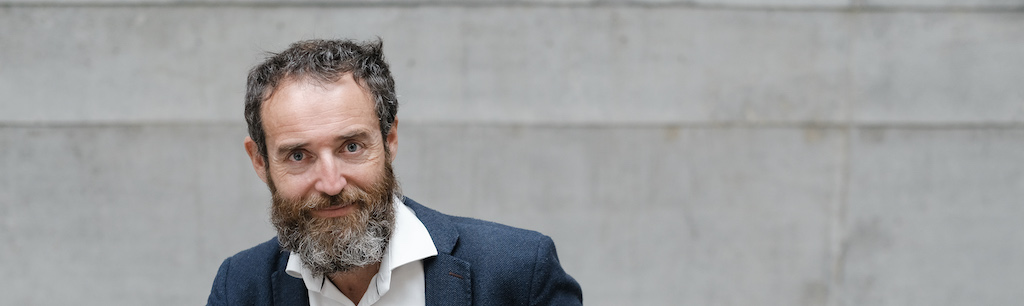



 JGDE. You are the President of the Technology Research Institute b<>com. What are the specificities of this Institute?
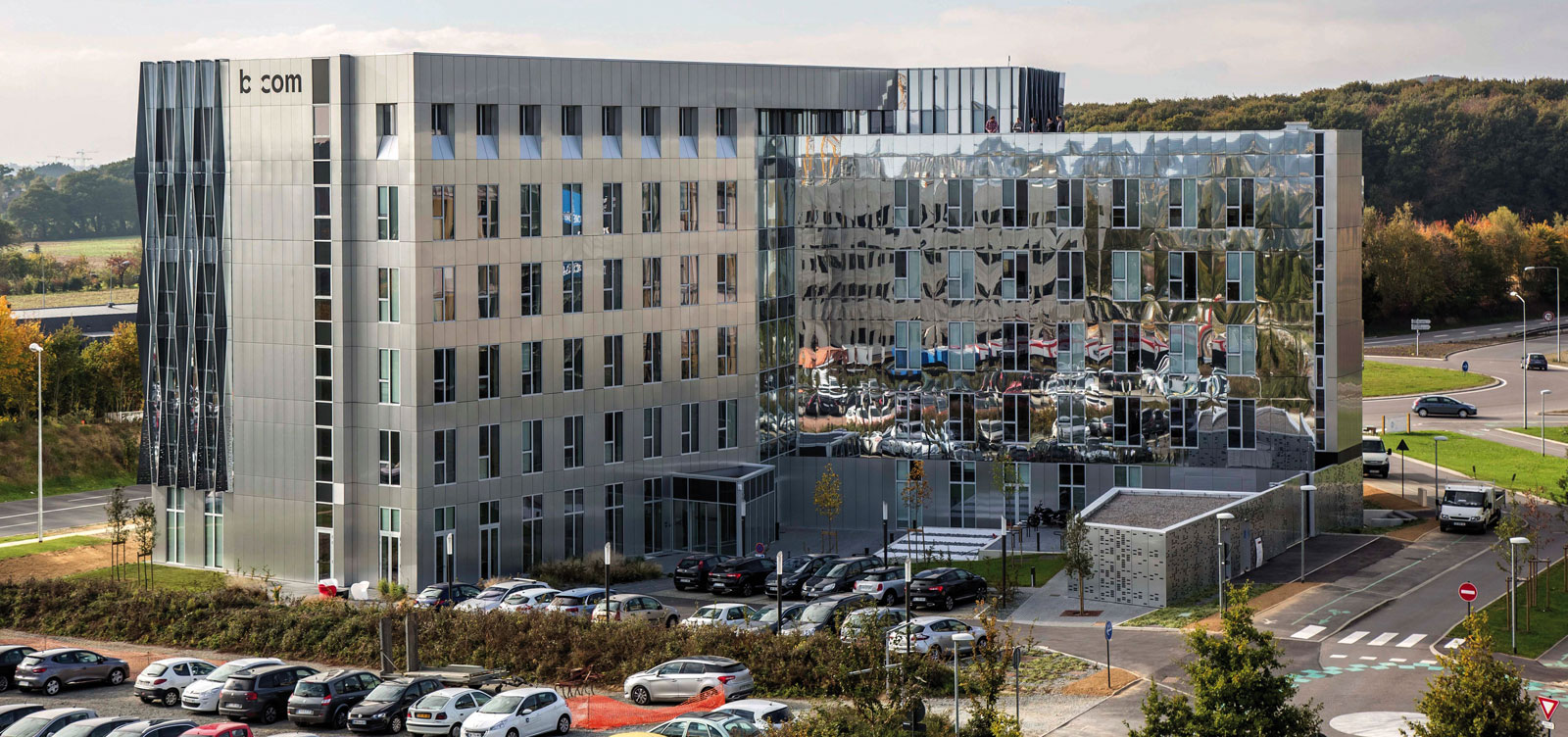
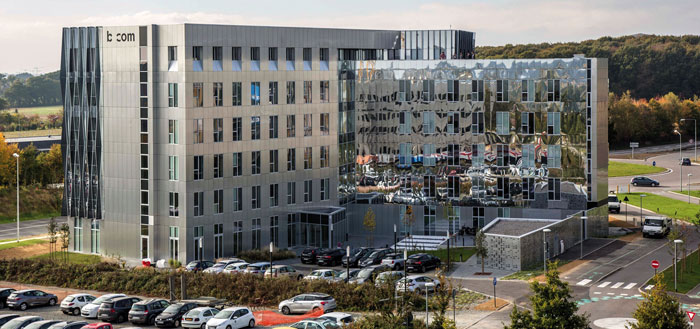
Vincent Marcatté. b<>com is an Institute for Technological Research (IRT), a unique model that allows private actors, large and small, and academic actors to work together in the same place. We are located on a 6,000 m² campus in Rennes but also in Brest, Lannion and Paris.
It is based on the pooling of human, financial and technical resources to move faster and farther together on the basis of a vision and strategy co-built to maximise knowledge development, economic and the associated income. An IRT is also based on a public-private partnership where everyone, the State and local authorities like the industrial members, share the risks and contributes to the leverage effect.
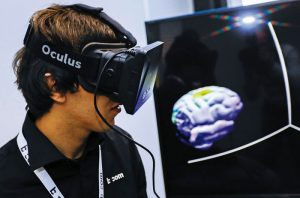
b<>com is unique in France because it is the only IRT to address the essential subjects for the digital transformation of society: networks and security (5G, Internet of Things, etc.), immersion and interaction with content (virtual reality (VR), augmented reality, artificial intelligence, etc.) or e-health (connected surgery or augmented surgery).
It is also a great tool of excellence, influence and attractiveness for the Bretagne region thanks to our global visibility.
 JGDE. You are also Director of Open Innovation at Orange Labs. What is the value of b<>com compared to what an R&D department could develop alone in a private enterprise?
VM. b<>com represents the best of collective intelligence. It attracts talents with diverse profiles and experiences from academic organisations, startups, small and medium-sized companies or large groups, enabling b<>com to invent and develop technologies «out of the box» that Orange would not have been able to achieve on its own.
b<>com is also agile, fast and knows how to align suitable means to take a place in the global competition. This mode of operation for a start-up makes it possible to be efficient for research and innovation advances.
JGDE. In your sector of activity, are there any European collaborations on an international level competition that is above all an area of constructive competition?
VM. This is called «co-opt». It is both cooperation and a competition. Working together internationally is a must in order to prepare for future 5G standards, immersive video and audio, and medical data exchange.
b<>com is now a recognised player in the European projects of the H2020 program and we have partnerships with the world’s largest research centers, starting with the famous German Fraunhofer.
Then it is up to each of us to be subtle and skilled in order to maximise the value of our assets at the international level in order to develop and measure the economic impact.
 JGDE. Can you give us examples of success stories or symbolic achievements developed by b<>com?
VM. b<>com received the Technology Innovation Award at the NAB in Las Vegas this year. It is the equivalent of the ESC for the professional world and the fact that a player as recent on the world stage is recognised by an American professional association is the indisputable proof of our excellence. Thanks to award-winning video technologies, we have had the opportunity to discuss with a great many new players, and there will be very concrete results. Some are already used by the Breton startup BBright to enrich its products.
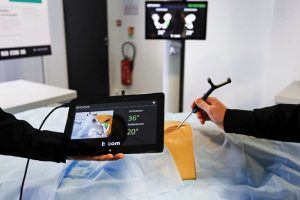
b<>com also has a unique 5G platform which allows the development of the new network at European level: this also differentiates us on the world map. In the field of health, we are the technological partner for the multimedia of a project carried out by the IHU of Strasbourg which aims to invent a surgery room of the future centered around the image.
JGDE. What do you see as areas of high development potential?
VM. It’s not surprising to you when talking about technologies such as artificial intelligence, 5G, the Internet of Things, virtual reality or augmented reality. For each of these technologies, we define a strategy to maximise the impact on market sectors such as health, the industry of the future, entertainment …
 JGDE. Obviously, there is much talk about digital transition. What are Bretagne’s assets to make this transition?
VM. Bretagne combines both a strong expertise in digital technologies and strong market sectors such as the blue economy, agriculture and agri-food, transport, health, renewable energies … This meeting of digital and market sectors are eminently conducive to a successful digital transition. Also of note is the willingness of the actors of the various sectors and the political actors to work together. Bretagne also has the Images & Réseaux competitiveness cluster that is able to facilitate this digital transformation that is impossible to circumvent.
JGDE. How would you describe the Internet of the future?
VM. The Internet of the future is that of an ambient connectivity that allows everyone to be connected wherever he is and to have access to what he wants without worrying about technology. It’s a human-centered Internet.
JGDE. You also preside over the competitiveness cluster Images & Réseaux, how does this cluster articulate with the Institute b<>com?
VM. Images & Réseaux is an animator and ecosystem developer that wants to be as broad as possible to embark the entire Breton economy into the digital transformation. To this end, it works with other regional economic development centers and structures by facilitating access to R&D projects adapted to their individual needs. b<>com is a research center that has its own technological and business roadmap and is one of the key players in the Images & Réseaux ecosystem. Their roles are complementary and both contribute to the influence and attractiveness of Bretagne.
 Institut B-COM
ZAC des Champs Blancs
1219 avenue Champs Blancs 35510 Cesson-Sévigné, France
www.b-com.com